Laura Bonnett
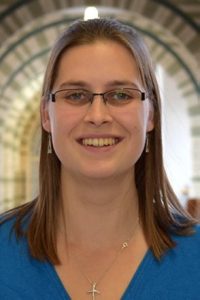
Chair of the Trust
Laura graduated from The University of Warwick with an undergraduate masters degree in Maths and Statistics (MMathStats), and from the University of Liverpool with a PhD in medical statistics.
She is based in the Department of Health Data Science at the University of Liverpool, where she is a Senior Lecturer in Medical Statistics and Programme Director for the MSc Data Science & Analytics for Health and MSc Data Science for Health (Conversion) programmes.
Her teaching involves communication skills, prediction modelling, and how to work within ‘team health data science’.
A Chartered Medical Statistician, Laura’s research focuses on developing and validating clinical prediction models, particularly for recurrent conditions such as epilepsy and asthma. Her work has informed national and European policy, including updates to the DVLA’s medical driving regulations and EU guidance on driving and neurological conditions. She has published widely in a wide variety of journals including the British Medical Journal, Diagnostic and Prognositc Research and Teaching Statistics. She has also presented teaching and research topics at conferences in the UK and as far afield as South Africa.
Alongside her teaching and research roles, Laura is an enthusiastic Science, Technology, Engineering and Mathematics (STEM) Ambassador and advocate for statistical and data science education. She develops free, hands-on resources to inspire wider engagement with data and statistics at careers fairs, science festivals, and STEM clubs.
She is Chair of the Teaching Statistics Trust, having twice won its Peter Holmes prize for papers published in Teaching Statistics in 2019 and 2024 that demonstrate excellence in motivating classroom activity.
Her other (outside) interests include Lego building and all things arts & crafts!
John Brennan-Rhodes

Trustee
John Brennan-Rhodes is a Maths Education Support Specialist at Mathematics in Education and Industry (MEI) where he develops and delivers teaching statistics professional development materials and courses for teachers.
He graduated from Durham University with a Master’s degree and a PhD in Mathematics.
His work focuses on sharing teaching strategies that motivate the statistics content of A level with real data and dynamic simulations. He also coordinates and delivers courses designed to support students preparing for university admissions tests.
He spent over a decade teaching in secondary education, most of it as Head of Faculty at Woodhouse College, a large sixth form college in London. During this time, he observed how many students enter A level mathematics with a negative view of statistics and lack awareness of how pivotal it is in the modern world. This insight continues to inspire his work in creating meaningful learning experiences.
One of his achievements at MEI was working as part of the team to redevelop the Teaching Statistics 2 extended course aimed at teachers of A level further maths. The course now includes Desmos simulations of how the Poisson distribution can be viewed as a limit of the binomial distribution and a ‘choose your own distribution’ demonstration of the Central Limit Theorem. It is built around real data examples such as historical data from William Sealy Gosset to motivate the t-distribution, and primary data on the number of chocolate chips visible on a popular brand of cookie.
John is committed to helping teachers build confidence in teaching statistics by deepening their understanding and encouraging approaches such as discussion, case studies and simulation.
His other interests include Lego, building computers and exploring new places around the country with his wife and daughter.
Neville Davies

Trustee
Neville is emeritus professor in statistical education at the University of Plymouth.
He graduated from the University of Nottingham with a degree in mathematics, and a Masters and PhD in statistics. He spent most of his working life at Trent Polytechnic (later Nottingham Trent University, NTU) teaching, researching and supervising topics in statistics at undergraduate and postgraduate levels for a wide range of subjects. He held visiting positions at universities in the USA, Australia and New Zealand. In 1993 he became a Chartered Statistician and in 1994 professor of applied statistics. He was a core member of the Statistical Education through Problem Solving (STEPS) consortium of universities based at the University Of Edinburgh.
He helped establish, and became director of, the Royal Statistical Society Centre for Statistical Education (RSSCSE), initially at the University of Nottingham and then at NTU. He drove UK-wide and international initiatives to improve statistics teaching, learning, literacy and assessment for people of all ages and for nine years was deputy director of the UK Maths, Stats and OR Network based at the University of Birmingham.
Based on a NZ trial, he conceived and led the CensusAtSchool project, a dynamic initiative bringing real data into classrooms in eight countries, still flourishing in New Zealand, the USA and Canada. The International Statistical Institute awarded CensusAtSchool ‘the best international schools’ project’, recognising the unique collaboration between the RSSCSE and the UK Office for National Statistics. He led innovations in Higher Education (HE) and developed a professional development course in ‘Teaching Statistics in HE’.
In 2009 the RSSCSE moved to the University of Plymouth where he became its inaugural professor of statistical education and continued as the Centre’s director. He furthered the international development of the CensusatSchool project, managed a data-driven project for the London Olympics and ran national schools competitions.
Co-author of one book, he has published widely in refereed journals on time series analysis and statistical education and teaching. He has delivered keynote talks and seminars at international research, teaching and professional development conferences worldwide. Elected to RSS Council from 1991 to 1995, he has served on several other RSS committees, including the Professional Affairs Committee, the Business and Industrial Section and the Education Committee.
Since retiring he has continued to publish in refereed journals on statistical education, curricula and teacher development. He has been a member and Chair of the Teaching Statistics Trust since 1999.
Other interests include Welsh rugby and the UK canal system, having travelled on most of the network in the last 50 years.
Eilidh Jack
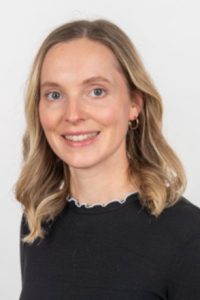
Trustee
Eilidh is based in the School of Mathematics and Statistics at the University of Glasgow, where she is a Senior Lecturer in Statistics, convenor of the Outreach and Public Engagement Committee, and head of Level 1 Statistics.
She graduated from the University of Glasgow with an undergraduate masters degree in Statistics with Work Placement, and later with a PhD in Statistics.
Eilidh’s scholarship focuses on active learning, with a specific interest on student engagement, particularly in large class settings. Her research focuses on developing statistical models to estimate changes in health inequalities across Scotland. She has published work in both research and scholarship, and has presented at many national and international conferences.
Eilidh is also passionate about public engagement and communication of Statistics and is involved in organising and running many public engagement activities through initiatives such as Glasgow Science Festival, Maths Week Scotland and Royal Institute Masterclasses. She has also co-developed a board game which explores the complex interactions between inequality, privilege, and health, developed for engagement with the general public and policymakers.
She was previously the chair of the Royal Statistical Society Glasgow local group and is a member of the Edinburgh Mathematical Society’s Education Group.
Other interests include hill walking in the beautiful Scottish countryside, cheering on her favourite football and rugby teams, and formula one.
Rhys C Jones
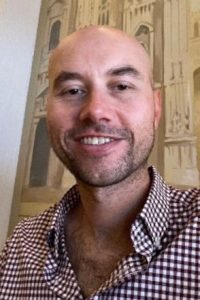
Teaching Statistics Editor in chief
Rhys is visiting professor of statistical education at Manchester Metropolitan University and editor in chief of Teaching Statistics.
He has completed four degrees across his educational career, which include an undergraduate qualification in biology, two master’s degrees in the fields of medical biochemistry and immunology, and an EdD at Cardiff University in the School of Social Sciences. It included an ex-tended research thesis, which evaluated the creation and implementation of a cross-curricula bridging course in Social Analytics for A’ level students.
This new course was co-created with teachers and university lecturers, across a range of disciplines, and focused on the investigation of social processes using quantitative methods and statistics. He used quasi-experimental methods to evaluate its effectiveness in increasing the confidence of learners in the areas of statistics and critical thinking. He also completed a postgraduate certificate in education (PGCE) in Further Education (FE), at Cardiff University, and taught on the same course, whilst working there as a lecturer in quantitative methods.
He has taught on a variety of undergraduate and postgraduate courses including statistics, research methods, biomedical science nutrition and organic chemistry, mathematics for science, health and well-being and clinical anatomy and physiology. He has also taught a variety of science-based subjects in FE colleges, which include GCSE, BTEC, Access and A levels.
He has held other lecturing positions at the University of Auckland, Birmingham City University and London Southeast College. Rhys was also the Associate Dean for Education in the Faculty of Health and Medical Sciences at the University of Surrey, where he supported the development and implementation of the faculty’s education strategy and the university’s education agenda.
His primary research contributions are in the areas of curriculum development, randomness misconceptions in statistics, and the role of context in statistics education. His research interests also focus on mathematical and statistical anxiety, helping to inform strategies to engage and motivate people in these subjects.
He serves on several statistics education committees, including the Royal Statistical Society (RSS) Education Policy Advisory group, the RSS Teaching Section, and the NZ Statistics Association Education Committee. He is also an elected member of the International Statistical Institute.
Rhys was the Teaching Statistics Trust lecturer in 2021-2022 and his talk ‘Weapons of Statistics Instruction,’ focused on the role of context and statistical literacy to help develop an individual’s statistical senses. He is Chair of the board for Potential Plus UK, a charity that supports children with high learning potential (i.e., bright/gifted children) and their families.
Author of two books, Rhys has published research papers in several national and international journals dedicated to teaching and learning.
Darren Macey

Trustee
Darren is lecturer in mathematics education at the Institute of Education, University College, London (UCL), where he supports the design and delivery of the new degree apprenticeship route into teaching.
He graduated from the University of Leeds with a degree in mathematics.
Darren’s career in education began as a mathematics teacher at secondary school level, working for 10 years in schools in Cambridgeshire and Hertfordshire. He also has a background in sports and outdoor education having worked at Tirabad Residential Educational Centre in Powys, Wales as an activity instructor teaching climbing, caving, and kayaking, amongst other outdoor pursuits.
In schools he spent time coaching sports and was briefly let out of the maths classroom to teach PE as well as training and assessing students taking the Duke of Edinburgh Award. These opportunities to work across a more diverse range of educational environments has seen Darren develop a strong interest in broadening perceptions of maths with a view to how other school subjects conceptualise what it means to engage students in educational activities.
After leaving classroom teaching Darren moved into educational design for a UK awarding organisation. In this role he was involved in the design, development and support of reformed GCSE maths, A-level Maths and Further Maths, and the new Core Maths qualifications. He worked for 9 years for Cambridge Mathematics, a project supported by the University of Cambridge focused on reimagining mathematics education for students from early years to 19. In this role he was part of a team co-designing a digital framework for curriculum design based on synthesising education research.
Darren took on statistics as a curriculum focus and spent many happy years immersed in statistics education research papers. During this time Darren developed a deep interest in supporting educators and policymakers to bring statistics teaching more into line with evidence and recommendations from research. To this end he is currently completing a PhD which explores how statistics assessment item design impacts teacher knowledge and pedagogical approaches.
He is a member of the Royal Statistical Society (RSS) Education Policy Advisory Group and an RSS statistics ambassador.
Helen Louise MacGillivray AM
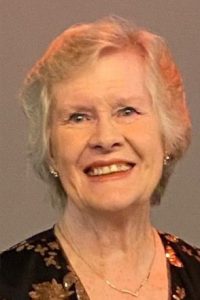
Trustee
Helen is Emeritus Professor in Statistics at Queensland University of Technology (QUT). She graduated with a degree in Mathematics and a PhD in Statistics from the University of Queensland. She is a Member of the Order of Australia (AM) for significant service to statistics and mathematics education.
Helen has published widely, on authentic learning, teaching and assessment in statistics and quantitative learning support. Her extensive experience and leadership in teaching and curricula design of 50 years extends across all areas of the statistical sciences, all subject levels and class sizes within most disciplines, particularly engineering and science, receiving support through awards and grants.
Her leadership roles included developing, coordinating, and leading teaching in diverse university degree programs, founding and directing QUT’s Maths Access Centre, Symposia in Statistical Thinking for postgraduates across disciplines, and a mentored developmental program in learning how to teach university statistics and mathematics. She has chaired reviews of university departments and centres across Australia and internationally, and worked as a consultant on teaching statistics in Australian universities and with the Royal Statistical Society.
Helen’s methodological research focused on the theory, understanding and applications of distributional shape, leading to the development, fitting and application of new distributional families. These papers are widely read and cited in diverse theoretical and applied contexts.
Helen has played key roles in school level mathematics and statistics, serving on syllabi and resource development committees, assessment panels, in core skills testing, as a statistical advisor in research and moderation, and as an educational consultant. She has given more than 50 professional development workshops for teachers, and established and implemented a variety of successful extension and enrichment programs for thousands of secondary school students.
She recently completed 11 years as editor of Teaching Statistics, significantly increasing submissions, reviewers, readership, editorial commentary, and initiating special issues, invited papers with discussion, and associate editors. She remains a Trustee of the Teaching Statistics Trust.
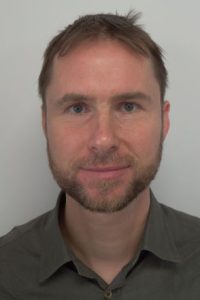
Peter Martin
Trust Treasurer
Peter Martin is Associate Professor of Statistics at the Institute of Epidemiology and Health Care at University College, London. He has studied psychology, social research methods and statistics in Bremen (Germany) and London, and holds a PhD from City University London.
One of the joys of being a statistician is that he gets to collaborate with fellow researchers from many disciplines, including psychology, sociology, health care, and epidemiology. In recent years Peter’s applied research has focused on evaluating psychological interventions for mental health problems and on patient outcomes after surgery. He has published over 60 peer-reviewed journal articles.
Another nice thing about being a statistician is that it gives the opportunity to teach. Peter has taught introductory statistics and advanced modelling methods to university students in the fields of psychology, social science, epidemiology and public health, and has published two textbooks on regression models.
In 2024/25, Peter was the Teaching Statistics Trust Lecturer and spoke about common misunderstandings of statistical inference and their implications for statistics education.
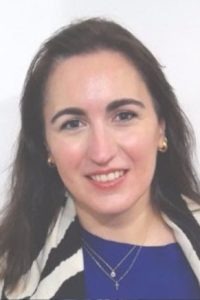
Matina Rassias
Trustee
Matina is Associate Professor (Teaching) in the Department of Statistical Science at University College London (UCL) and is Special Interest Group Lead for Active Learning within the Researchers of Statistics Education Network (RoSE) Network.
She has a degree in mathematics from the National and Kapodistrian University of Athens in Greece and a PhD in statistics and modelling science from the University of Strathclyde in Glasgow.
Prior to joining UCL in 2010, she was a research scholar at the University of California, Berkeley, and a teaching fellow at the University of Glasgow, working jointly with the Department of Statistics and the Mathematics, Statistics and Operational Research (MSOR) subject centre of the Higher Education Academy – she has developed expertise at the intersection of statistics education and the mathematical sciences.
Matina teaches at undergraduate and postgraduate levels, focusing on assessment for learning and active learning, with a strong emphasis on developing statistical and mathematical thinking – using her extensive experience of working with specialist and non-specialist students in statistics. She has contributed to UCL summer school provision and staff continuing professional development, and co-organised sector-facing events that build bridges between university educators and the wider statistical education community.
She has disseminated research and teaching practice through conferences, including the International Conference on Teaching Statistics (ICOTS). She serves on the editorial board of the journal MSOR Connections, supporting the dissemination of practitioner-led innovation across mathematics, statistics and operational research education.
Engagement with the Royal Statistical Society (RSS) includes contributions to conference programmes and co-organisation of a UCL/RSS symposium on teaching statistics in higher education, strengthening dialogue between higher education and the professional community.
Through inclusive practice, evidence-informed design and iterative improvement, Matina aims not only to enable students to reason confidently with data, but also to work with colleagues and communities to promote engaging, high-quality statistics education in schools, colleges and universities.
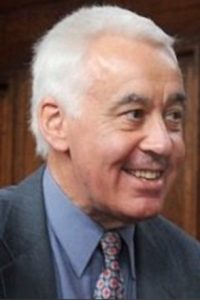
Neil Sheldon
Trustee
Neil Sheldon is a semi-retired teacher, but is still actively involved in teaching, lecturing and, through committee membership, advising a wide range of national bodies on important statistical and data science issues.
He has degrees in Mathematics and Philosophy from Oxford and London universities, and he has professional qualifications in Statistics and Computer Science.
He taught for many years at Manchester Grammar School; he has also taught at the Open University, Manchester Polytechnic (now Manchester Metropolitan University), University of Plymouth (UoP) and, most recently, at Helsinki University where he is a visiting lecturer, delivering a postgraduate cross-disciplinary course in the communication of statistics. He has been an examiner for a wide variety of qualifications, including A levels, Cambridge STEP and the professional examinations of the Royal Statistical Society (RSS).
Neil has been involved in professional development for teachers for many years, working for bodies such as the RSS Centre for Statistical Education at UoP, Mathematics in Education and Industry (MEI), and the Prince’s Teaching Trust. He is a Chartered Statistician, and he was the RSS Vice President for Education and Statistical Literacy from 2014 to 2017.
Neil was the RSS Guy Lecturer in 2007-8, and the Teaching Statistics Trust (TST) Lecturer in 2019. His TST lecture, We need to talk about statistics, was about the importance of language in the interpretation and communication of statistics. Neil is a long-standing member of the TST and was Chair from 2012 – 2025.
Neil is also a Chartered Engineer and a Chartered IT Professional. He was the RSS representative on the International Data Science in Schools Project curriculum team. He served on the Royal Society working party on computing education in schools that led to the report Shutdown or Restart.
Neil’s other interests include linguistics and early jazz. He is Vice Chair of the UK Linguistics Olympiad, and he can be heard on internet radio with his programmes The Roaring Twenties and A Year of Jazz.
For more information see Neil’s website: neilsheldon.net